Our work is grounded in longitudinal ethnographic research.
We observe aging as it is lived, not only through interviews or aggregate data, but through sustained attention to environments, routines, relationships, and adaptations over time.
We pay attention to what people say and do, and to what surrounds those actions:
the layout of a home,
the rhythm of a workday,
the digital tools that support or exhaust,
the subtle adjustments that accumulate across years.
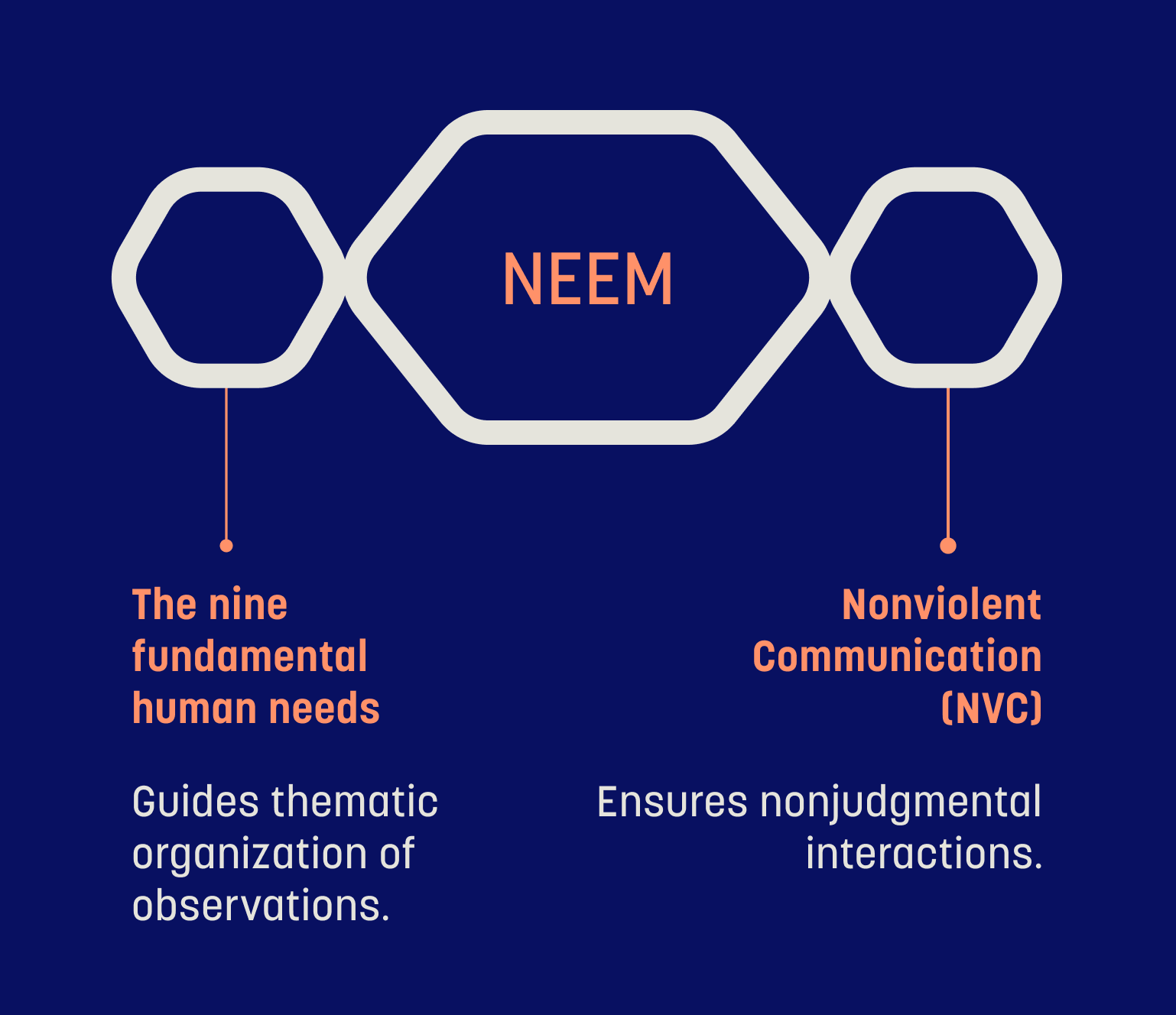
NEEM (Needs & Emotions) is the observational framework developed by Aging Observatory.
It connects observed behaviors to the underlying human needs and emotional drivers shaping them, translating lived experience into structured ethnographic intelligence while preserving complexity.
This framework draws from human development theory and empathetic inquiry. It translates lived experience into structured intelligence without stripping away complexity.
For example: understanding retirement not as a financial calculation alone, but as a negotiation between identity, dignity, financial security, and family expectations, enabling more grounded policy and product design.
We combine qualitative depth with careful analysis, building knowledge that accumulates across contexts rather than disappearing into one-off reports.
Full list of themes:
-
![Housing]()
Housing
How aging adults navigate housing decisions, from accessibility and affordability to belonging and care, and how home environments evolve across life stages.
1/10
-
![]()
Constraints and adaptation.
How individuals adapt to personal and structural constraints as they age, physically, socially, and environmentally.
2/10
-
![]()
Transfer of time and money.
How financial support, unpaid labor, and time are redistributed across generations, often informally and invisibly, within aging households and care systems.
3/10
-
![]()
Caregiving and aging in place.
How individuals provide and receive care while remaining in familiar environments — and the emotional, logistical, and spatial adaptations that make this possible.
4/10
-
![]()
Bereavement.
How individuals experience and navigate loss, emotionally, socially, and structurally, and how grief reshapes identity, routines, and support networks over time.
5/10
-
![]()
Work and retirement.
How adults in midlife and beyond navigate changing relationships to work, identity, income, and purpose, and how transitions into retirement are shaped by broader economic, social, and cultural forces.
6/10
-
![]()
Political behavior.
How aging influences political participation, civic identity, and attitudes toward institutions, including shifts in engagement across life stages and social conditions.
7/10
-
![]()
Volunteering.
How older adults contribute time, skills, and care to their communities, and how volunteering supports identity, purpose, and social connection later in life.
8/10
-
![]()
Technologies.
How aging intersects with a rapidly accelerating technological era, including the rise of AI, automation, and digital identity. How individuals adapt, reject, or redefine their relationships with emerging tools that increasingly shape everyday life.
9/10
-
![]()
End of life and medical expenses.
How individuals and families navigate the emotional, financial, and practical realities of end-of-life planning and care, often under pressure, uncertainty, or limited support.
10/10