
The challenge in aging is not a lack of data.
Governments collect statistics. Companies run surveys. Universities publish research.
Yet much of this knowledge remains disconnected from how people actually experience aging day-to-day.
Most research begins at 65+, when care needs become visible, and costs rise. But the patterns that determine how people age begin much earlier, in midlife transitions around work, housing, health, relationships, and financial stability.
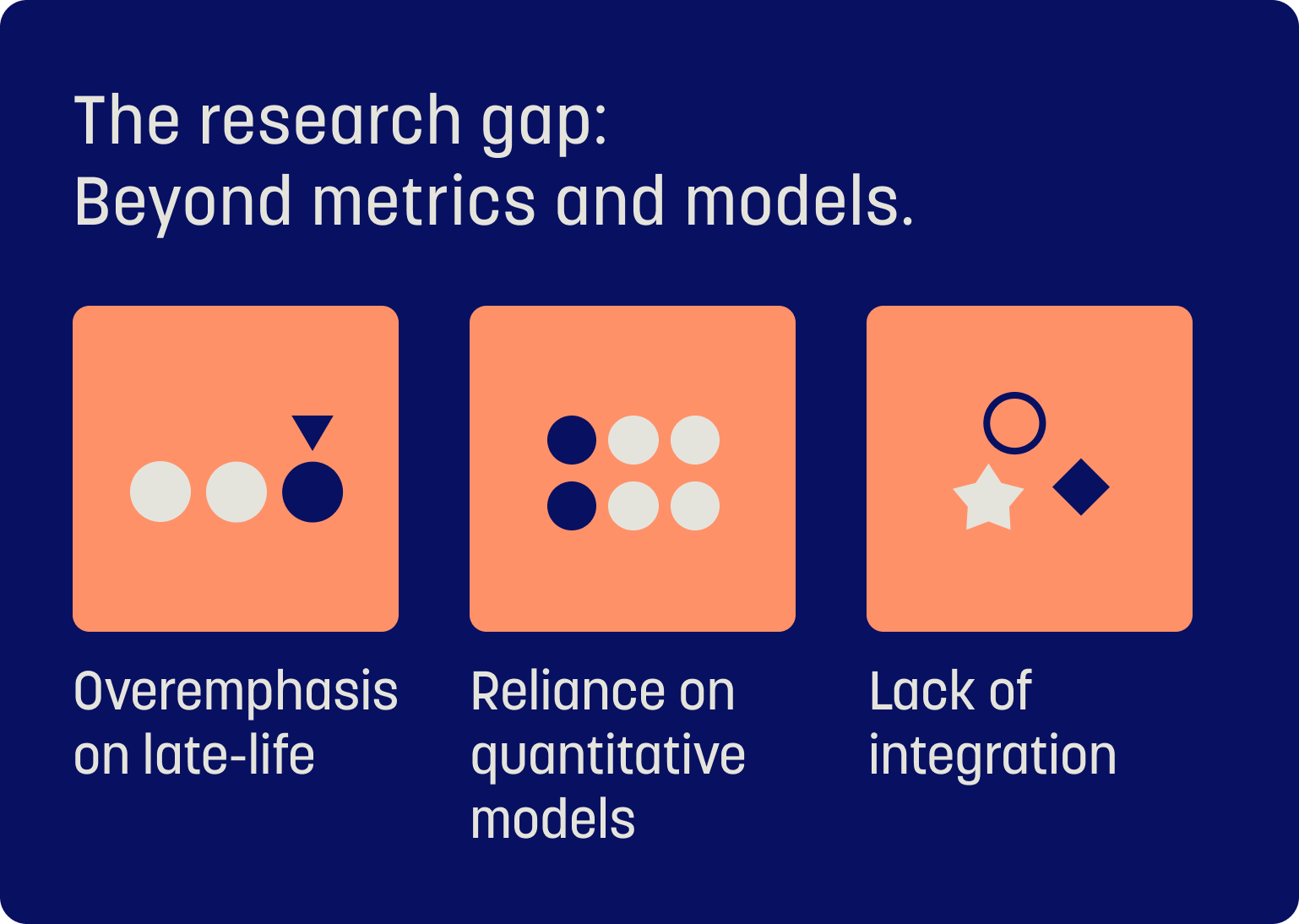
Consider retirement planning. A pension fund may design products assuming voluntary, well-planned exits at 65. Yet many workers retire earlier than expected due to layoffs, caregiving responsibilities, or health pressures, decisions shaped by years of accumulated strain. Without understanding these upstream patterns, policy and products miss the mark.
Aging Observatory studies this middle ground.
We approach aging not as a late-life condition, but as a continuous, evolving experience. By observing people while they are still adapting, deciding, and navigating change, we help institutions prepare rather than react.